
Volunteer Updates & Opportunities
Let’s Share some Zoo Memories
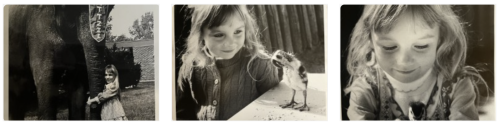
Check out these ADORABLE photos of one of our current volunteers, Lisa Keist! These photos were featured in the Cincinnati Enquirer in 1975. The photo on the left is a picture with Lisa and Schottzie, and the other two were taken in the Children’s Zoo!
For the 150th anniversary I thought it would be fun to gather photos of the volunteers over the years here at the Zoo to showcase how special this place is. My plan is to share these in the updates, but also put together all the photos to share with the staff at the Zoo too. I think every one would love to see where volunteer history and Zoo history collide! Please send your photos to [email protected]. I can’t wait to see them!
Thank you Lisa for the idea!
Zoo Updates
50 Years of the Zoo Academy
************
A Little Bit of Zoo History
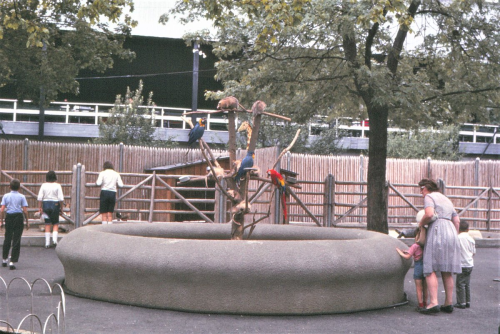
In 1937 the first Children’s Zoo was constructed. One of the world’s early children’s zoos, it has been rebuilt several times since!
*************
Check this out!
************
Vote for our Botanical Garden!

We’re up for Best Botanical Garden in Newsweek’s Readers’ Poll. Voting ends 2/27. You can vote once daily. Best Botanical Gardens 2025 | Newsweek Readers’ Choice Awards – Newsweek
************
Sustainable Urban Landscape Symposium
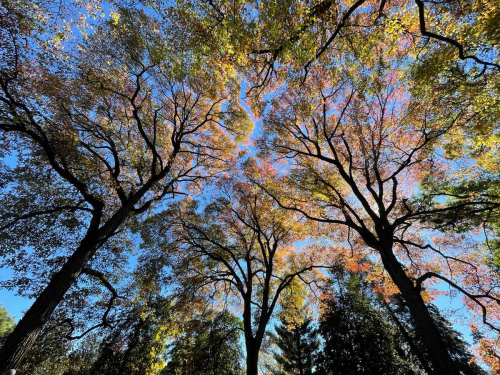
Register for the Sustainable Urban Landscapes Symposium on 3/13! Join top horticultural & sustainability experts for inspiring talks on creating vibrant ecosystems & welcoming landscapes https://cincinnatizoo.org/events/sustainable-urban-landscape-symposium/
Plant & Animal Updates
Animal Excellence Updates
Quarterly, each of the 14 animal care teams identifies 2-3 welfare priorities that they plan to work on over the 3-month period. These can be big or small, but they must be measurable, and they must be reasonably achievable without significant help from outside department. At the end of the 3 months, we review this list of priorities, celebrate the ones we achieved and discuss those that weren’t achieved yet.
Below are some of our teams’ successes in Animal Excellence from October-December 2024.
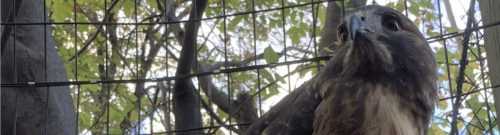
In moving Rhett, the Red-tailed hawk, from her former role as an Animal Ambassador to her new role as an exhibit animal in Wolf Woods, we needed to redo the former Gray fox habitat to suit a non-flighted raptor. This included installing step-like perching so Rhett could hop from ground level all the way up to the top perches. For training, the North America team worked with the Ambassador team to learn Rhett’s maintenance behaviors including target, scale, and crate. She has done some great glove work as well. For enrichment, Rhett enjoys a variety of substrates, toys and puzzles and she seems to have settled in nicely in her new environment and with her new care team.
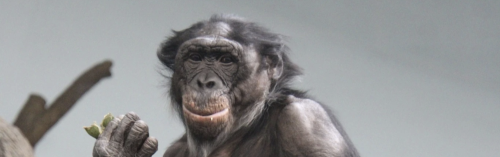
All bonobos, excluding Gilda, voluntarily took their RSV vaccine! This is the first time the vaccine has been offered in non-human primates in a zoo setting. Flu vaccines and training for additional medical behaviors are still under way.
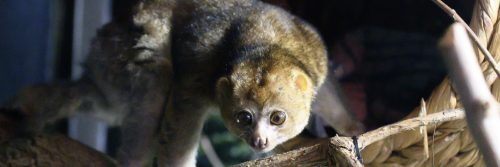
The pottos have made improvements in weight management and coat quality, which is a great indication of improved management approaches. They have also demonstrated improved resiliency, acclimating well when maintenance events happen in proximity to their enclosures.
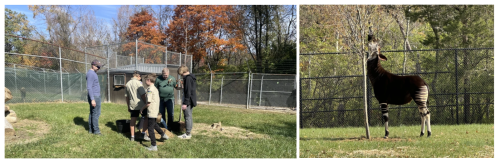
Mast Farm team, in collaboration with the Boy Scouts of America, planted 10 trees between different cheetah pens in both the male and female cheetah facilities and the okapi yard to provide more shade in the future. These pens and spots were chosen due to the large amount of space that did not offer any shade.
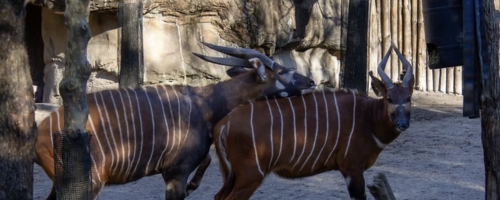
The team introduced a new bull bongo to our females. Over the course of several weeks they went from visual access to nose-to-nose access to short intros in the habitat. Overall the process has gone very well and they can spend up to 6 hours together in the yard. Next step will be longer days and eventually (with warmer weather) they will be together 24/7.
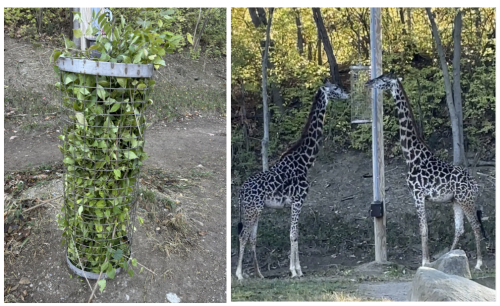
The team borrowed the idea of a browse cage from another facility to extend the foraging time of our giraffe herd.
This was a huge success, keepers have shared that the foraging has gone from merely minutes in a normal bundle for up to an hour in some scenarios!
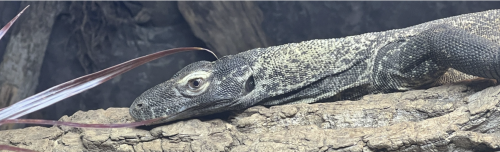
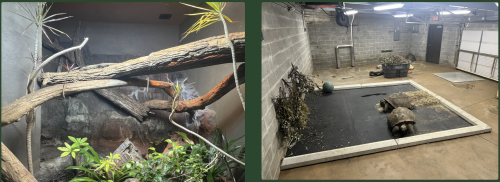
Fruno (Komodo Dragon) – Despite the improvements made, Fruno still required more space than his current enclosure could provide. In early February, he was relocated to Dragons, and into a significantly larger habitat designed to accommodate his boundless energy and natural instinct to explore.
Galapagos Tortoises – The newly installed rubber mat provides our tortoises with a softer, more comfortable surface to rest on, offering a gentler alternative to the hard concrete flooring of their indoor habitat.
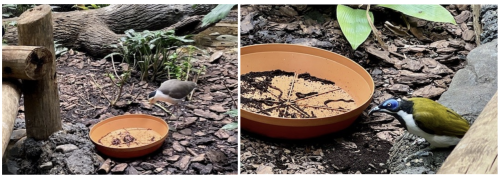
Team Bird trialed a new diet item, red wigglers, with some of our species that are approved to consume insects. They were presented to our South America, Australasia, and Grasslands exhibits. The team offered this as a project for their Zoo Academy students, who observed which species were actively eating them, showing interest, or no interest at all. This was a great collaboration, offering information to the bird team and teaching the students how to ID our birds.
Active Interest (consuming or picking up) – Bali Mynahs, Honey Eaters, Masked Lapwings, Motmots.
Showed Interest (visual inspection, moved closer) – Southern Lapwings, Cacique, Shama Thrush, Blue crowned laughingthrushes, Buffalo weavers, GB Starlings
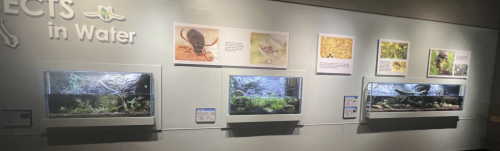
Aquatic Insects – Three new, larger aquatic insect displays were created to replace the five smaller displays that previously occupied this part of the World of the Insect. The new displays are between three and four times larger than the displays they replaced. The extra space has allowed for the creation of dynamic habitats teaming with activity.
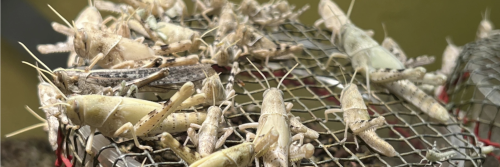
Greybird Grasshoppers – This is one of the oldest insect cultures maintained at World of the Insect, with the original animals having been collected in southern Arizona’s Sonoran Desert in the early 1980’s. Recently the population of Greybird Grasshoppers seemed to be waning, so it was decided to collect eggs monthly as opposed to collecting them on an “as needed” basis. This change has resulted in more consistent production of hatchlings and thus led to a more vigorous population.
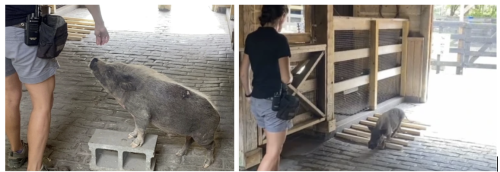
Cinder getting PT
The team noticed that one of the pigs, Cinder, was starting to show signs of weakness in his back end. He was struggling with coordination and balance at times as well. Our vet team invited a specialist to evaluate Cinder and create a physical therapy plan for him. Once the behaviors were finalized, Eunice began training the new behaviors and adding the PT behaviors into his daily schedule. There is a notable difference in his progress and now he has a few more behaviors to work on to improve his strength even more.
************
Hippo Fact
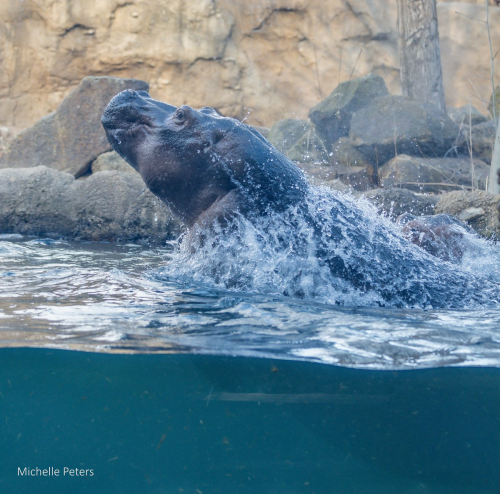
The hippo’s closest living relatives are whales and porpoises! Despite their aquatic lifestyle, hippos can’t swim or float; instead, they push off the bottom to propel themselves and surface for air.
**********
Cheetah Cub Update
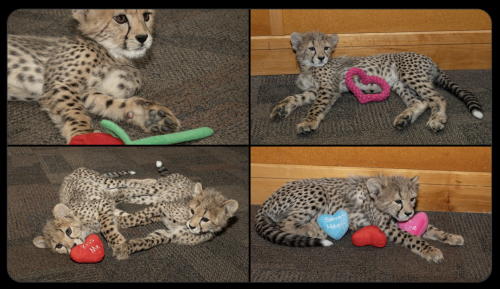
Check out this adorable photo of Lulu, Zola and Kiara from Valentine’s Day:
************
2/14 – World Bonobo Day
Did you know that you can support one of our conservation partners with purchases from the gift shop?
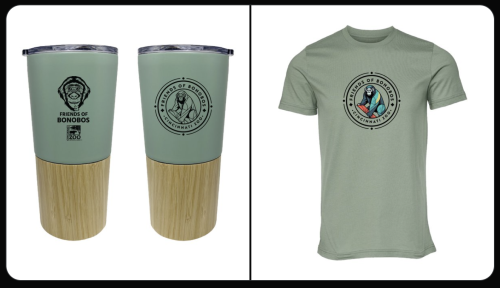
Support our conservation partners with these new items in the Zoo’s store! https://shopcincinnatizoo.com/collections/whats-new/products/tee-adult-bonobo-circle
***********
2/15 – World Hippo Day
***********
Cayenne
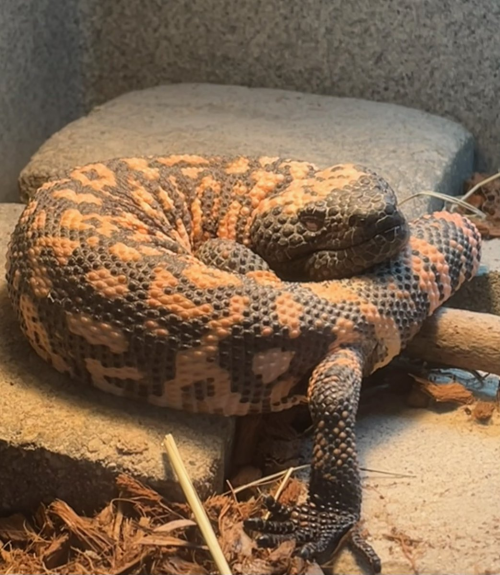
Cayenne the gila monster curled up for a nap! Gila monsters are one of the few species of venomous lizards on the planet! Visit the gila monsters in the Reptile House!
***********
Our Animals Picked a Winner
Birds Ori, the milky eagle owl, and Henry, the Major Mitchell’s cockatoo, pick the Eagles to win too!
**********
Renji
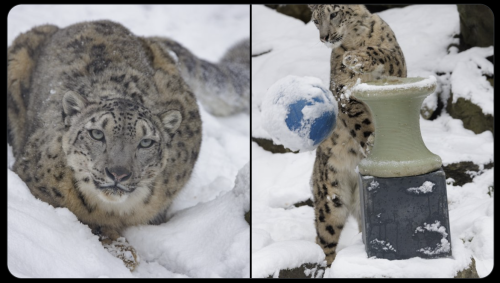
Renji prefers this winter weather! The snow leopard’s thick, 5-inch coat keeps it warm and camouflaged in rocky terrain. They even use their furry tail as a scarf to block the wind. Sadly, this beautiful coat also makes it a target for poachers, threatening their survival.
**********
2/10 – Happy Birthday Sanjay
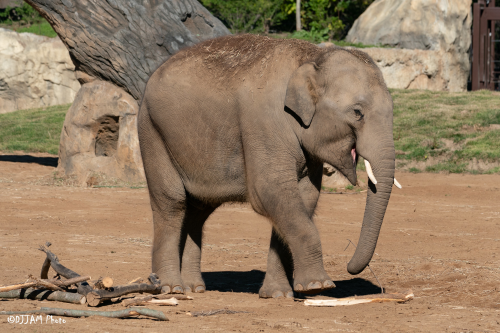
Sanjay turned 7 years old!
************
Hellbenders
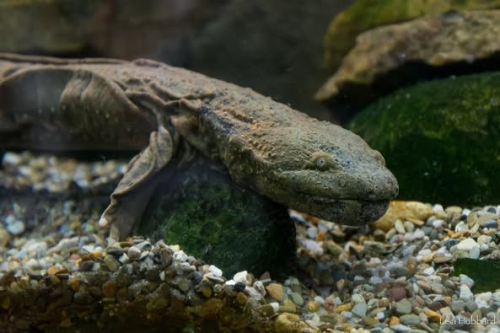
Hellbenders are the largest fully aquatic salamander in the United States. They live in fast-flowing streams and rivers, and they absorb water through their skin. We can help their declining population by keeping our waterways clean and reducing our use of chemicals.
Conservation Corner
2025: The Year of Reframing Perspectives
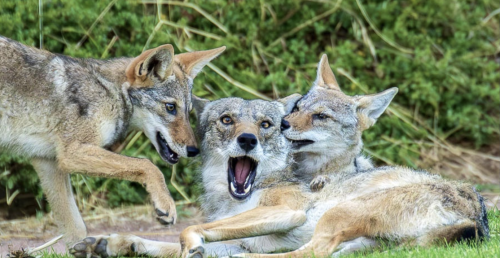
Your Observations Can Help Local Wildlife!
Did you know that simply taking photos of wildlife can contribute to conservation science? A recent study using iNaturalist data has helped researchers better understand coyote movement and behavior in urban areas—providing insights that support coexistence efforts. You can read the study here: 👉 https://academic.oup.com/jue/article/7/1/juaa032/6055886
This study used iNaturalist data to analyze human–coyote encounters in Madison, WI, between 2015 and 2018. Researchers reviewed 398 reports and found that most encounters occurred during coyote breeding season and in moderately developed areas.
Key findings:
🔹 90% of encounters were rated as calm (0 on a 0-5 aggression scale), while only 7% showed mild aggression (1 on the scale).
🔹 Coyotes were most frequently seen near paved roads, during certain biological seasons, and at specific times of day.
🔹 Overall, human–coyote interactions were mostly benign, rather than negative or aggressive.
The study highlights the value of citizen science in understanding wildlife behavior and recommends public outreach to promote peaceful coexistence with coyotes.
—
You can be part of this important work! By using apps like iNaturalist and Seek, you help scientists gather crucial data on local wildlife.
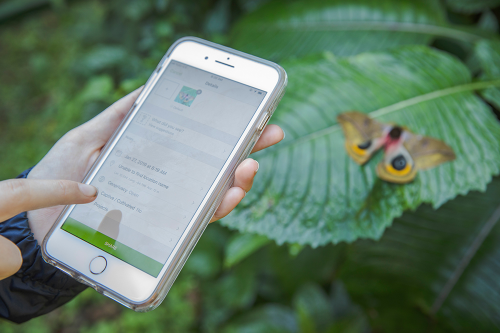
How to contribute:
- Download iNaturalist or Seek (both free!)
- Snap a photo of wildlife or signs of their presence (tracks, scat, etc.)
- Upload your observations to help researchers and conservationists!
Every observation helps create a clearer picture of how wildlife navigates our shared spaces. Start exploring today and contribute to real conservation science!
***********
Barrows Conservation Lecture Series

Tickets on sale now for Barrows Conservation Lecture Series! Get ready for an inspiring lineup of expert speakers discussing wildlife conservation & the ways we can all contribute to protecting endangered species. https://cincinnatizoo.org/events/barrows-conservation-lectures/
**********
Hydroponics Recap

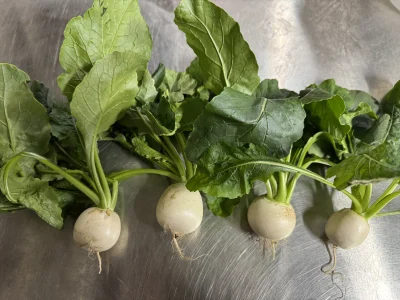
- In 2024, the Hydroponics Program successfully produced 8,810 lbs. of produce, with romaine lettuce and kale being the most grown and highest producing crops.
- These crops were chosen for their significance in the dietary plans of various animals, with an emphasis on romaine lettuce, which accounted for 75% of the container space.
- The remaining 25% was allocated to kale and trial varietals.
- The produce was primarily supplied to the manatees and giraffes, with semi-regular deliveries to the hippos and elephants.
- Notably, the giraffes were the largest consumers, starting in late May they received their entire allotment of romaine lettuce from the Hydroponics Program.
- 84,978 guests in 2024 participated in the Giraffe Feeding Program, feeding giraffes hydroponic lettuce while learning about the hydroponics initiative.
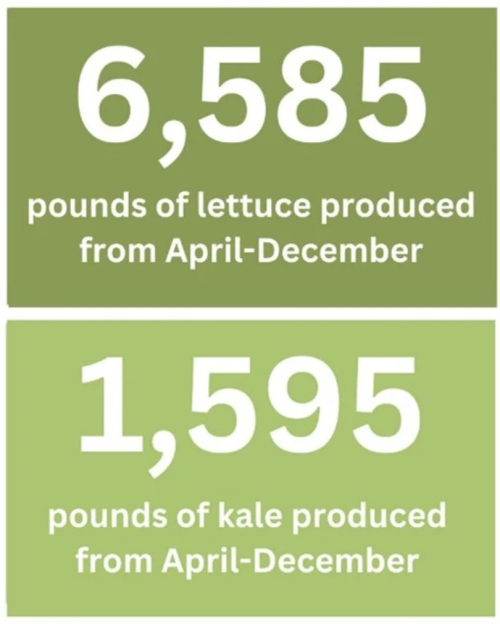
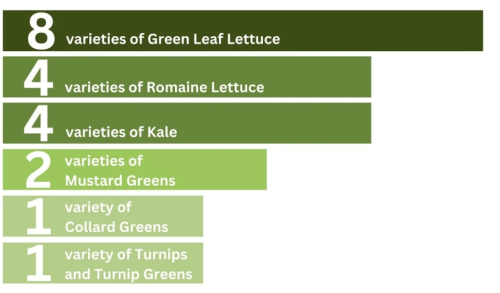
In 2024, we experimented with 20 total varietals of 6 different crops, including:
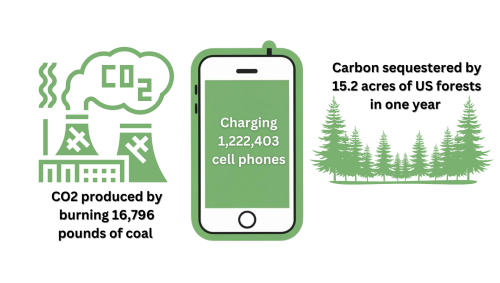
Scope 3 Emissions Savings Reduction
From April to November of 2024, the Hydroponics Program potentially reduced 15 MtCO2e of transportation emissions which is the equivalent to:
Other Highlights Include
- 319.75 adult volunteer hours were logged for hydroponics in 2024. Several more volunteers will be enrolled into the program in early 2025!
- Launched a Hydroponics Zoo Academy lab in Q2 of the 2024-2025 school year and will continue indefinitely, giving students hands-on experience working in hydroponic systems.
- Worked with Barbara Henry to contribute our data, which was presented at the annual AZA Conference in September 2024. Preparations included submitting samples of our hydroponic produce for nutritional analysis and comparison to USDA-standard romaine lettuce.
- The farms’ operative processes integrate with the Zero Waste Initiative, such as plant waste being composted in the on-site biodigester, contributing to a closed-loop sustainability model.
***********
Webinar Series

It’s time for another webinar series featuring our coexistence partners from around the world!
These webinars are a chance for all Zoo staff and volunteers to learn the stories of the conservation work the Zoo supports with your help. Join us to learn more so that you can share details with our visitors and help us grow even more of the good work happening around the world.
We’ve begun confirming webinar days & times with our partners, which are featured below. Recording links provided after each webinar.
These partners will present their projects, wildlife, communities, and conservation aspirations followed by a Q&A, where our partners will take questions from our CZBG community. Feel free to tune in from anywhere.
HUTAN – Marc Ancrenaz
- Thursday, January 23, 2025 at 9:30 am
- Key topics: Orangutans, Malaysia, Palm Oil
- RECORDING
WASIMA – Jonathan Kwiyega
- Tuesday, January 28, 2025 at 10:00 am
- Key topics: Coexistence, Pastoralism, Lions
- RECORDING
SAFE Tree Kangaroo and Tree Kangaroo Conservation Program – Lisa Dabek, Beth Carlyle-Askew, Trevor Holbrook, & Sam Merson
- Thursday, February 5, 2025 at 1:00 pm
- Key topics: Tree Kangaroos, Community Conservation
- RECORDING
The Sloth Insitute – Sam Trull & Pedro Montero
- Monday, February 10, 2025 at 11:00 am
- Key topics: Sloths, Rehabilitation, Sloth Movement
- RECORDING
Turtle Survival Alliance – Dave Collins
- Wednesday, February 20, 2025 at 10:00 am
- Key topics: Chelonians, North American Conservation, SAFE
- RECORDING
Elakha Alliance – Chanel Hanson & Jane Bacchieri
- Wednesday, March 4, 2025 at 12:00 pm
- Key topics: Sea Otters, Reintroduction
- Zoom link: https://us06web.zoom.us/j/84651200597?pwd=4cOGzhAQzMeTvHM2a85EfEDoPhec6F.1
In Case You Missed It
New Volunteer Opportunity – Field Trip Arrival Facilitators
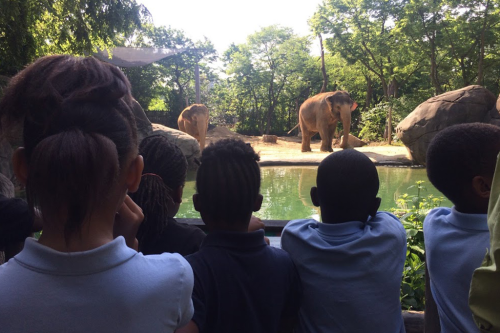
Help create a great first impression for visiting school groups at the Cincinnati Zoo! As a Field Trip Arrival Guide, volunteers welcome students, teachers, and chaperones, provide helpful information, and assist with school group arrivals. Work alongside the School Programs and Visitor Experience Teams to ensure a smooth entry process and an unforgettable visit.
We are still looking for more Hydroponics Volunteers – Click Here to Read the Position Description & Click Here to Apply
***********
New for 2025: Natural History Lecture Series for Volunteers

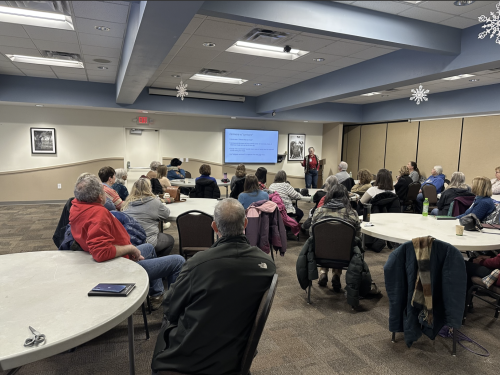
Carol facilitated her first Lecture this week and it was a smashing success with many kudos sent her way by attendees! If you would like to attend a future session, please sign up for the event in Better Impact! Arrival information is sent out 2-3 days before the event with all the logistic information.
Schedule and Topics:
- Tuesday January 14, 2025 – Cat-like Carnivores
- If you missed the lecture, or would like to review the material, check out the link below
- Trosset 202501 Cat-Like Carnivores.pdf
- Tuesday February 11, 2025 – Vernal Pools
- Vernal pools are temporary wetlands found in deciduous woodlands, including those in Cincinnati. These habitats support a range of invertebrates and provide breeding grounds for salamanders and other amphibians. We’ll also learn about the Zoo’s conservation efforts at Bowyer Farm.
- 202502 Trosset Vernal Pools.pdf
- Thursday March 13, 2025 – Dog-like Carnivores
- The suborder Caniformia includes wolves, foxes, weasels, bears, and more. We’ll discuss their defining characteristics, then visit several zoo habitats to observe seven species on display.
- Thursday April 10, 2025 – Woodland Wildflowers
- Cincinnati’s woodlands are home to many species of wildflowers, which bloom in the early spring before the trees leaf out. We will examine the different types of spring wildflowers, their ecology, and their blooming sequence.
- Tuesday May 13, 2025 – Introduction to Birdwatching
- Early May brings many migratory birds to Cincinnati. We’ll cover key features for identifying bird species, followed by birdwatching on zoo grounds. Bring binoculars if you can; a limited number will be available to borrow.
- Friday June 13, 2025 – Primates
- Primates are categorized into prosimians, Old World monkeys, New World monkeys, and apes—all represented at the zoo. We’ll discuss their similarities and differences, then observe members of each group on exhibit.
Sign up for all lectures in Better Impact! Please RSVP by registering in the system. If you can’t attend, we’ll aim to record and share the lecture portion with all volunteers. We hope to see you there!
***********
Do you have any old Zoo memorabilia or merchandise tucked away?
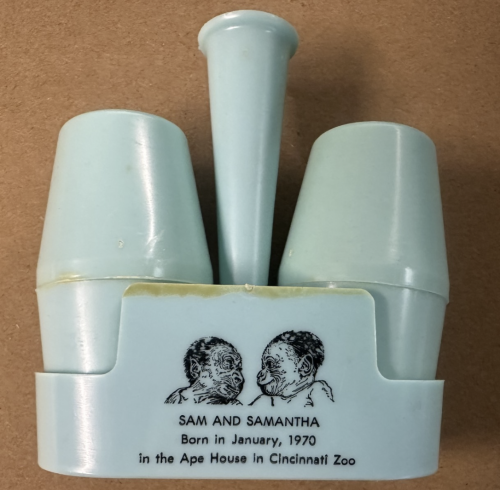
We’re creating a mini archive of cool souvenirs from over the years, and we’d love your help! If you have something, you can either send a photo or if you’re looking to declutter, I’d be happy to give your treasures a new home – Feel free to send me an email directly [email protected]