
Volunteer Updates and Opportunities
Volunteer Appreciation Picnic _ Time to RSVP

It is time to RSVP for the End of Year Celebration! If you have logged 40+ hours by today, you can RSVP for the Volunteer Picnic in Better Impact! Please make sure to RSVP by October First to grab your spot! Information on the picnic will be sent to everyone the week before the event!
*Please let me know if you have any questions, or if you believe there has been an error. Special circumstances are taken into consideration, please contact your volunteer supervisor.
Zoo Updates
SepTENber
***********
Free Admission for First Responders
************
Solar Arrary
************
Wildlife Ranger Challenge
************
SSA is launching our new recycling program at Cincinnati Zoo

SSA is proud to launch a first-of-its-kind program where guests can return used stuffed animals and other plush. We then work with Terracycle, which processes these into raw materials for use again in something new and different. We are always looking for more opportunities to promote circularity in our stores and so excited to push the envelope in the retail industry!
To encourage guest participation, we are offering a 15% discount on core plush!
Next week, Dallas Zoo, Oakland Zoo, Brookfield Zoo, Columbus Zoo and Houston Zoo will join the program!
Details
- Guests who bring in any used plush for recycling will receive 15% off the purchase of a new core plush.
- This discount is only applicable for purchases made on the same day. Only one discount can be applied per donated plush.
- This program will be promoted in the main store only
- This discount cannot be combined with any other offer
***********
New Sculpture in Elephant Trek
************
Behind the Scenes Tours Update_VulPro
************
ZooTales Podcast
Sloth Superheroes Unite!
In this episode, join the Cincinnati Zoo staff as they recall their journey to The Sloth Institute to help save sloths! From creating sloth speedways to collecting camera traps, these wildlife warriors show that protecting sloths https://cincinnatizoo.podbean.com
Plant & Animal Updates
Sabu is going to be a Dad X2
*************
Bringing Back Endangered Clover
************
CREW Update_Publication

As a medicine, study finds rhino horn useless — and potentially toxic!
************
Plant for Pollinator Kits Available!
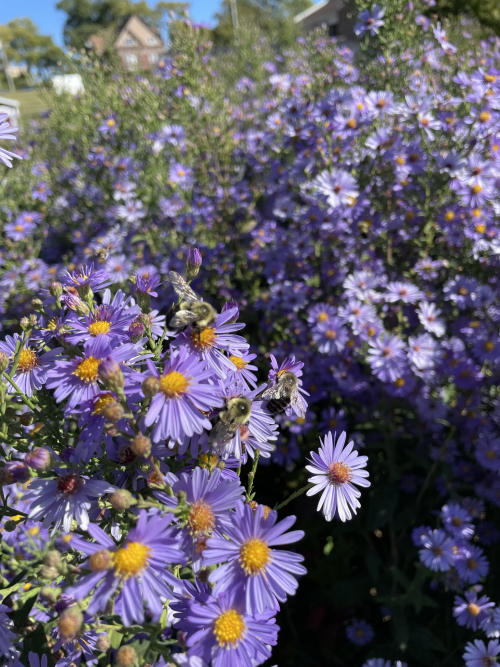
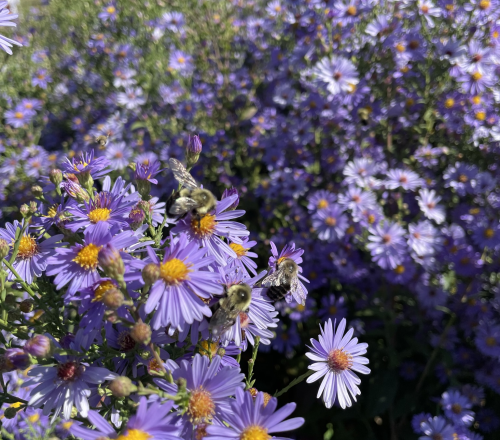
With the flurry of activity around right now, and the crazy lack of rain, it is easy to overlook your garden. But, if you want to add some pop this fall, our Plant for Pollinators Kits are on sale now! Our recipe this year is called A Pollinator Favorite, and Jerome 😊 has created a collection with a variety of bloom times from summer – fall, with varying texture and height. The recipe has a some airy, light, pastel colors, that create a soft vibe that will compliment your existing pollinator plants.
They sell out fast and we have a limited amount!
Here’s the link: https://store.cincinnatizoo.org/webstore/shop/viewitems.aspx?cg=PKIT&c=FPKITS24
Pollinator kits MUST be picked up from the Cincinnati Zoo IN PERSON on Tuesday, September 24 between 4:00pm – 6pm. This is the only pick up window. Pick up will be at the Harold C. Schott Education Center.
- · Aster laevis ‘Bluebird’ ~ Celebrated for its profusion of striking blue flowers. A clumping habit with and overall graceful look, A native that attracts native bees and butterflies and other pollinators. Full/Part sun. Height 30-36” tall.
- · Calamintha ‘Montrose White’ ~ A clump forming compact plant that is covered with tiny, white, fragrant flowers. Makes an excellent edging plant along paths and walkways. Full sun. Height 12-18” tall.
- · Phlox paniculata ‘Jeana’ ~ Exceptional nectar-rich flowers that blooms mid-summer to early fall. Lavender-pink flowers that is mildew resistant. Full sun-partial shade. Height 24-36” tall.
- · Pycnanthemum tenuifolium ~ This mountain mint is prized for its long blooming season and is a great choice for wildlife gardens. The leaves have a pleasant minty aroma, with narrow, almost silvery leaves. A wonderful pollinator. Full sun-partial shade. Height 12-26” tall.
- · Veronica ‘Blue Skywalker’ ~ this speedwell is a bushy upright, clump forming plant with tall spikes of blue flowers. It has a great impact in a garden bed. Performs best in full sun. Height 28-30” tall.
You will receive a total of 15 plants (3 of each variety). – $99.99, PLUS tax
**************
Zoo Baby in August!
the CZBG’s population of Armadillo Lizards (Ouroborus cataphractus) grew by one when we welcomed our newest baby into the world. Our baby was born after a gestation of between six and eight months and will be cared for and maybe even be fed by its mother.
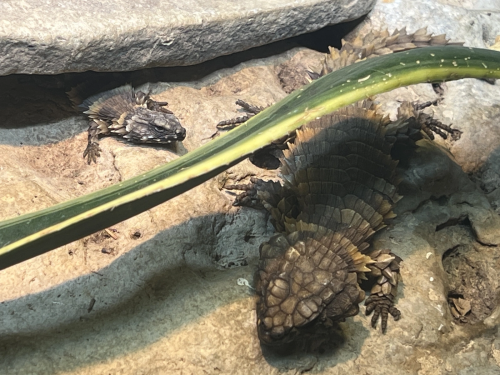
Our work with Armadillo Lizards began in November of 2019 when we received five animals confiscated at CVG being smuggled into the United States from South Africa. Each of the lizards was tied into a sock that had been sown into a stuffed animal.
This week’s birth is the 3rd for our group; our previous babies were born in March 2020 and October 2022. The CZBG is one of only 3 zoological facilities in the United States and one of only 11 in the world to maintain Armadillo Lizards.
Armadillo Lizards are listed as Threatened by the IUCN. Their future is imperiled by overcollection for the pet trade, climate change and habitat loss.
Please visit Dragons to see our newest baby. The baby can easily be distinguished from the adults by its small size.
***********
Happy Birthday Ajani Joe
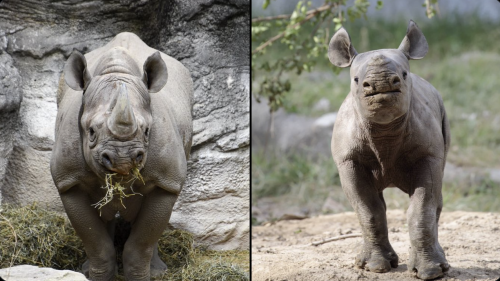
Ajani Joe turned 4 on August 21st!
************
Cheetah Encounter’s Newest Stars
The newest stars of the Kroger Cheetah Encounter
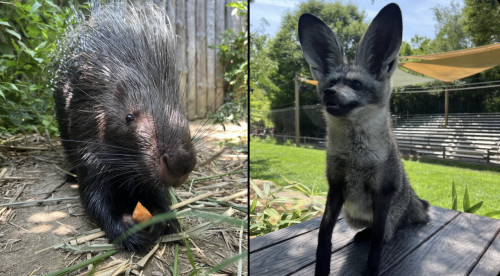
Violet the porcupine and Kal the bat-eared fox!
***********
Rozi_Cheetah Facts
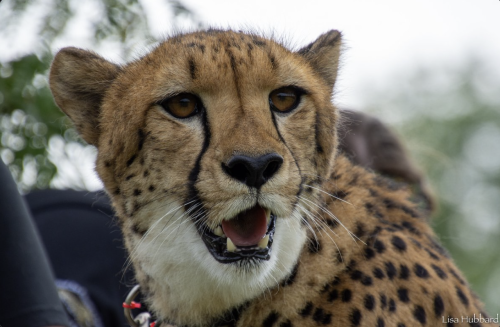
Rozi the cheetah looking picture purrfect. The dark tear mark below a cheetah’s eye, called a malar stripe, absorbs the sunlight to keep the glare of the sun out of its eyes.
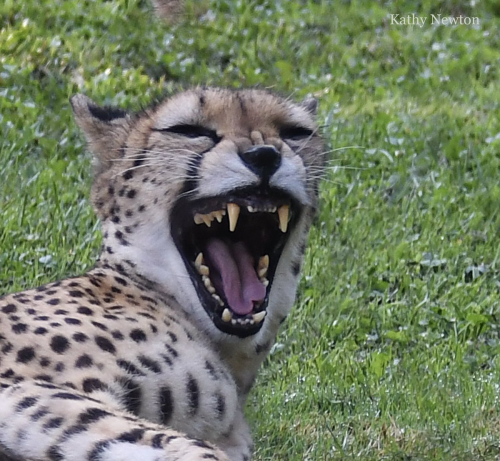
Big yawn! Cheetahs are the fastest land mammal & since they run so fast, they have over-sized nasal passages to help them breathe. That takes up too much room in the cheetah’s skull for their jaw to accommodate large teeth, so their teeth are smaller than most big cats!
************
Violet – Cape Porcupine Facts
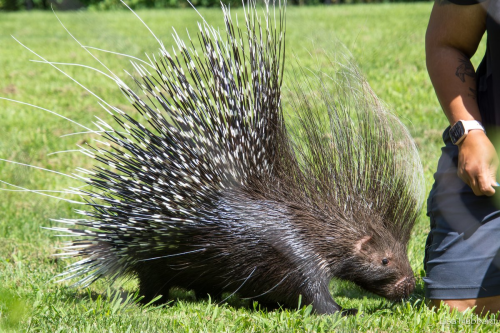
Violet the porcupine is getting so big! When threatened, the Cape porcupine erects its spines and quills to look bigger.
************
Manatee Facts
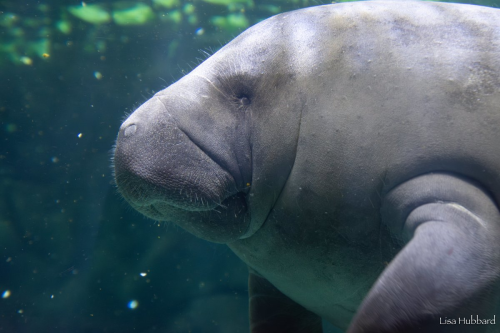
Though it is streamlined in shape to reduce water resistance, the manatee is a slow swimmer, averaging a speed of about three to five miles per hour.
***********
Tiger Facts
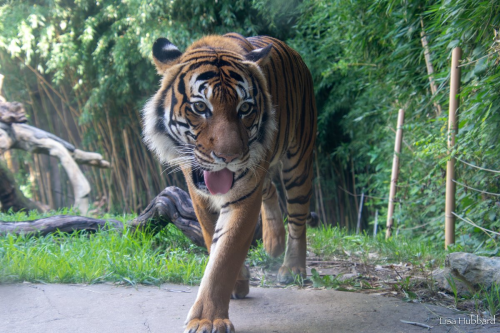
The claws of the tiger are up to 4 in long & are used to grasp and hold onto prey. Each paw has 4 retractable claws & 1 dewclaw.
***********
Happy Birthday John!
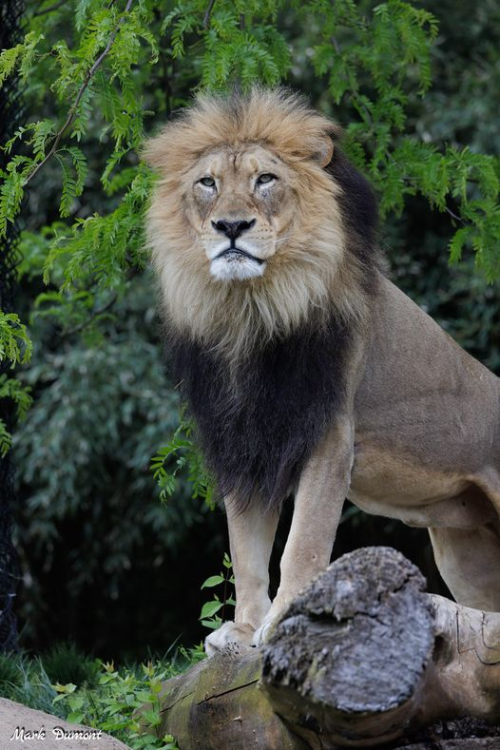
John turned 14 on August 31st!
************
Happy Birthday Lightning!
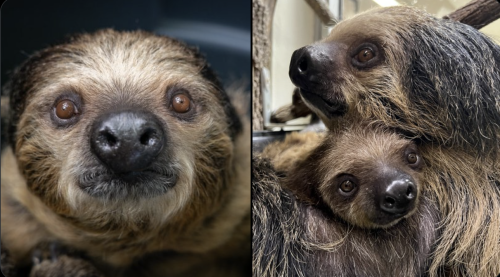
Lightning turned 12 on September 1st!
************
Little Blue Penguin Facts
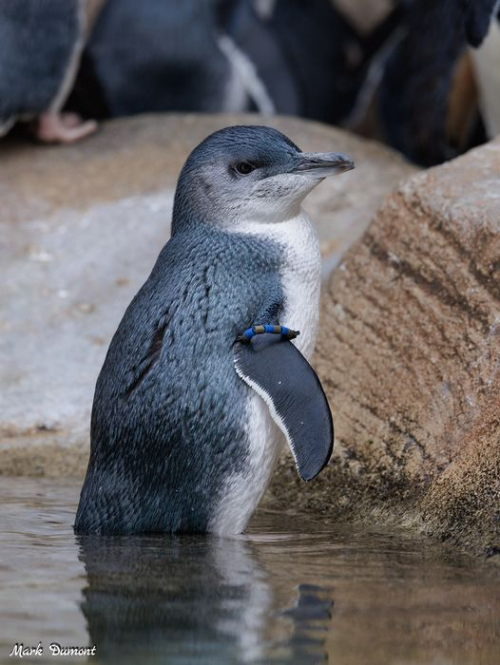
The smallest of all penguins, little blue penguins are also called fairy penguins due to their tiny size. Like other penguins, little blue penguins are designed to swim, not fly. They spend the day foraging for small fish in the shallow waters of the sea close to shore.
*************
Happy Birthday Bobby!
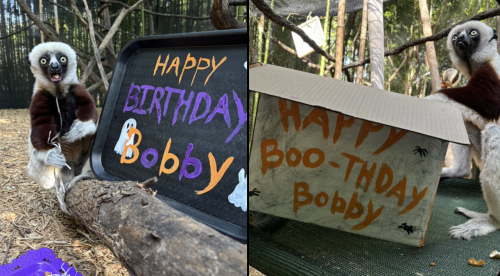
Bobby, the sifaka, turned 12 on September 3rd!
Conservation Corner
Sihek Stories
************
Help save our Old Growth & Mature trees and forests! (Written by Mollie O’Neil)

The U.S. Forest Service has initiated a first-of-its-kind effort to recognize old-growth forests in national forests. The federal agency is proposing an amendment to forest plans across the country. In Ohio, the amendment would apply to the Wayne National Forest — the largest public forest in the state. While we believe the Forest Service’s effort to recognize old-growth forests is a step in the right direction, we also believe it falls far short of ensuring meaningful change and protection for existing old-growth forests and maturing forests that could one day recover old-growth status.
We’re calling on the Forest Service to strengthen its proposal, and your voice will help us make that case.
Protecting old-growth and mature trees NOW is crucial. Help preserve our natural heritage, safeguard our climate, and ensure future generations inherit a world rich in biodiversity. Public comment remains one of our most important tools for protecting our public lands.
All comments are due by September 20th
Our forests are our best natural weapons in the fight against climate change, especially old-growth forests. These forests grow significantly stronger in the absence of logging and extraction practices over a long period of time. Few of these forests remain in Ohio, but they can return if we give them the time and space to grow.
***********
New Partner Organization – Introducing Hutan (Written by David Orban)
Orangutans are some of the most intelligent and arboreal of great ape species, and due to a variety of threats, they are also among the most endangered. Operating out of Sabah, Malaysia, HUTAN is championing a variety of programs in the area in order to research and protect wildlife – and also build up local communities.
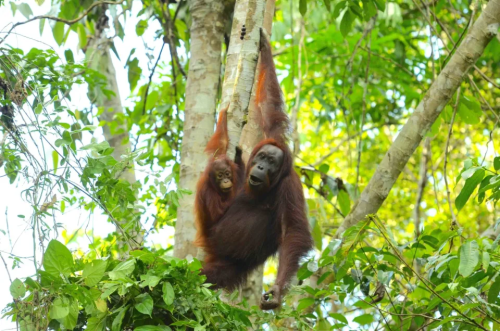
HUTAN
Originating in 1998 as an orangutan research site, HUTAN has evolved and grown to lead research and coexistence work across multiple sites and communities in Sabah, Malaysia. Their primary focus is to better understand how people and wildlife can coexist in and outside of protected areas, particularly with the emergence of palm agriculture. Sabah is unique as people here primarily experience wildlife outside of protected areas, so understanding community perspectives, issues, and challenges are key to protecting wildlife.
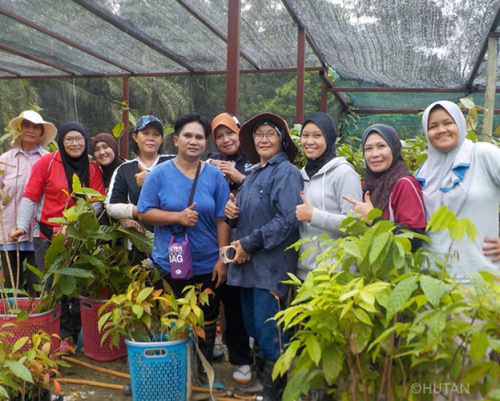
Now with over 100 full-time employees on staff, HUTAN focuses on building local conservation leaders in the following areas of focus:
- Orangutans – research to understand orangutan adaptation to degraded forest or non-forest; creating and studying artificial bridges (regularly used by smaller primates); surveys through helicopters and drones
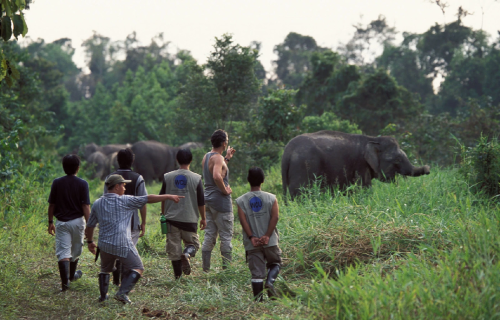
- Elephants – studying elephant ecology, population dynamics, and movement (using satellite radio collars); evaluating human-animal conflict, including public opinions; testing elephant deterrents (noise cannon, electric fencing, and Elephant Guardian Units that work in the community)
- Hornbills – building and studying use of artificial nest sites
- Swiftlets – cave protection to safe-guarding from nest harvesting (used in traditional medicine)
- Reforestation – planting trees to reconnect landscapes; all-women team!
- Environmental education & capacity building – offering environmental education programming to primary and secondary schools throughout Sabah; Junior Ranger program
- Agriculture partnerships – actively engage with palm oil plantations to maintain forest corridors
- Policy & Advocacy – partnering with government agencies to craft forest management plans and policies
* With strong ties to the Sabah Wildlife Department and local communities, protected land mass in Sabah has gone from 12% to 26% over the last 20 years.
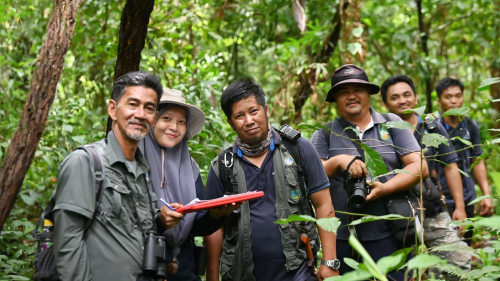
In July, a group of CZBG staff met with Dr. Marc Ancrenaz, Scientific Director of Hutan, to learn more about some of their current work.
Q. What is something you’ve been proud of in the last year?
A. Recent research findings out of HUTAN has dramatically changed the conversations surrounding orangutan conservation… 1) Recent research has shown the orangutan natural history strongly is maligned with current strategy of translocation of orangutans (females in particular stay close to their natal geography) and 2) Overwhelming evidence has been found that orangutans do leave forest habitat and utilize palm plantations (further reinforcing that there is less need to translocate orangutans).
Q. What are your biggest challenges working in wildlife conservation?
A. Fortunately funding is not an overwhelming challenge for Hutan due to ongoing support from partners across the world. The biggest current challenges are succession planning and organizational management for the future, as well as always adapting to shifting politics and politicians’ perceptions of conservation equating to anti-development.
Q. What additional support, resources, knowledge or skills would increase your organization’s impact in conservation?
A. Spread the message of recent scientific findings, as well as reinforce an approach of sustainable palm oil (rather than a boycott of palm oil altogether, which is not feasible).
We expect a visit to OH from HUTAN staff in 2025. We plan to invite them to CZBG so that our staff can learn more. For now, you can learn more about HUTAN here: https://www.hutan.org.my/
AZA SAFE ORANGUTAN
Founded in 2018, AZA SAFE Orangutan is in the middle of its 2nd program plan. AZA partners in this program work together to fund and support in-country partners focused on the following: habitat protection and restoration, orangutan anti-poaching and trafficking-based reintroduction, research, and in-country community engagement and education. OSAFE currently partners with and supports 6 organizations in Malaysia and Indonesia:
The Cincinnati Zoo & Botanical Garden signed on to be an official OSAFE program partner this year, qualifying through our financial contributions to HUTAN.
To learn more about OSAFE: https://www.azaorangutansafe.org/
WHAT YOU CAN DO FOR ORANGUTANS
There are 3 distinct species of orangutans living in Malaysia and Indonesia, all facing similar threats of habitat degradation & fragmentation, as well as illegal hunting/trafficking. Here are a few ways you can get involved with helping orangutans and other Southeastern Asian wildlife:
- Sustainable Shopping. Sustainable palm oil farming is the key to preserving appropriate habitat for wildlife in the region, including orangutans. Download the PalmOil Scan Mobile App – a free resource to guide sustainable purchasing choices.
- Promote Awareness. Tell others about International Orangutan Day by sharing a post on social media. Be sure to add the following hashtags: #iheartorangutans, #orangutans, #WeAreAZA, #SavingSpecies ** Better yet, share the message that orangutans have been shown to be able to coexist in palm oil agricultural landscapes if done sustainably!
- Contact your Legislators. Visit AZA’s Legislative Education Action Center to show your support for the Captive Primate Safety Act – a vital piece of legislation to regulate private pet ownership of all primate species. After the successful passing of the Big Cat Public Safety Act legislation in 2022, this bill is now gaining momentum.
To learn more about our resident orangutan “Henry” that lives at the Cincinnati Zoo & Botanical Garden, check out this great CZBG blog post from a few years ago, written by Jungle Trails keeper Faith Hall.
Volunteer Corner
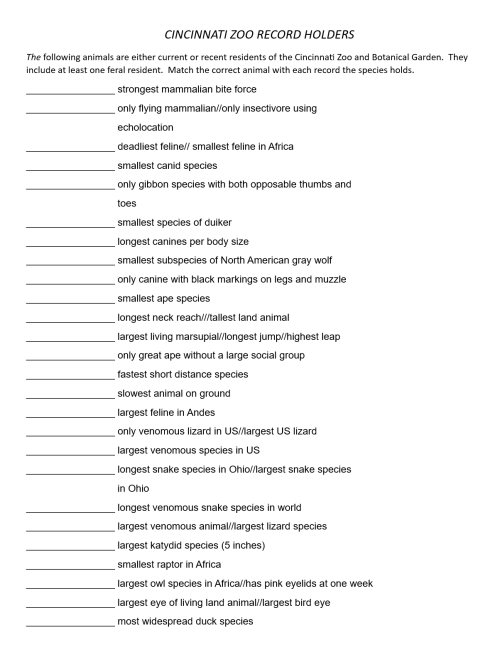
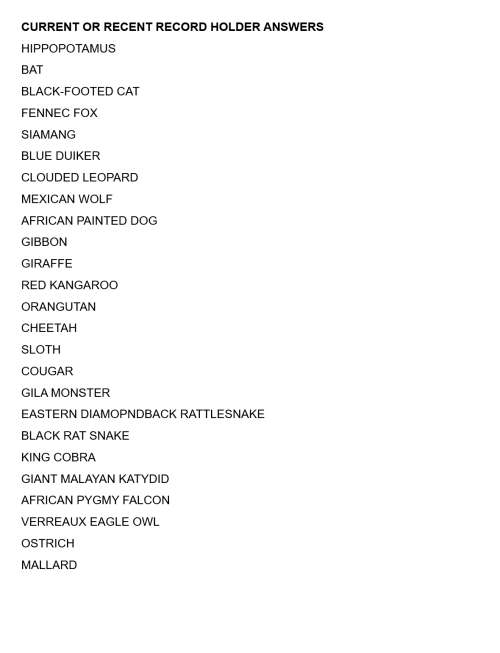
Answers to the Record Holders Quiz:
************
ONE LAST QUIZ
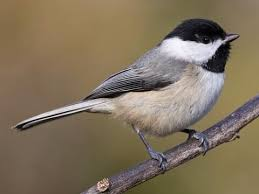
How many caterpillars will a nesting Carolina Chickadee collect each day?
A. 25-50
B. 100-200
C. 400+
*Answer in the next Update!