
Volunteer Updates & Opportunities
Reminder – Jane Goodall Omnimax Screening – 5/21

It isn’t too late to sign up for the Jane Goodall screening next Tuesday! If you are interested in attending, sign up in MVP. I will be closing the sign ups for this showing on Monday, 5/20 at 11am. I will send out arrival and ticket information to everyone who signed up after 12:00pm on Monday! I hope to see you there!
***********
ZooLaLa Volunteer Sign-Ups
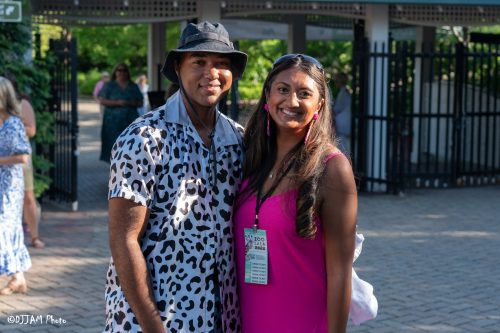
ZooLaLa is the region’s wildest party for a purpose, and will be held at the Cincinnati Zoo & Botanical Gardens on Friday, June 21st ! (Click Here for additional information from the website) If you are interested in volunteering at this event, please click on the link below and fill out the form. All Volunteers need to be 21+ years old to volunteer.
Click Here for the ZooLaLa Volunteer Form
At ZooLaLa you could assist with pouring, restaurant help, greeting or other tasks. There are 2 different shifts options, you can find them listed below.
*I will do my best to accommodate your selection, but I cannot guarantee that you will receive you first choice because spots are limited.
- First Shift - 5:30pm-8:30pm - Once your shift is complete, you are welcome to enjoy the event.
- Second Shift - 8:00pm-11:00pm - After Check-In you are welcome to explore the event and will not need to report to your station until the start of your shift.
- *This is a great option for anyone who would like to taste test all the delicious food because many of the food booths close after 9 and only the late night bites will be open.
There are a limited number of Volunteer spots and will be assigned in the order they are received. During the week of June 10th, I will send out a follow up e-mail with your role and additional arrival information.
***********
Zoo Volunteer Observer
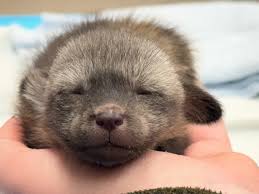
The ZVO team has been busy with several watches over the past few months, including a birth watch for Kal (pictured above), and there are more to come! We are seeking new volunteers to join the ZVOs and remotely monitor animals via webcams that require 24-hour observation, noting any behavioral changes for the animal care staff. If you are interested, please read the full position description below and apply through the provided link.
- Zoo Volunteer Observer
- Position Description: ZVO Volunteer Description_1.19.2024.docx
- ZVO Application Form (Only Open to Internal Applicants)
***********
Thursday’s Curator Chat
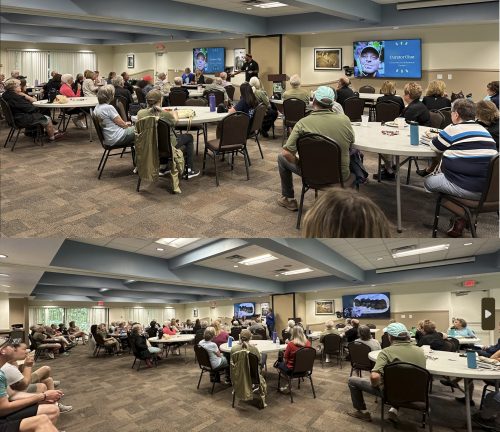
A HUGE Thank You to the Animal Leadership Team for the incredible Curator Chat on Thursday. From Winton imitating a Blue Morpho butterfly to Kim’s adorable photos of Mexican Wolf pups, there was something for everyone. Unfortunately, the technology wasn’t working in Treetops so I was not able to record the session. BUT…there were about 70 volunteers in attendance from all around the Zoo, so make sure you ask for stories!
Zoo Updates
NBC Nightly News Features Cincinnati Zoo
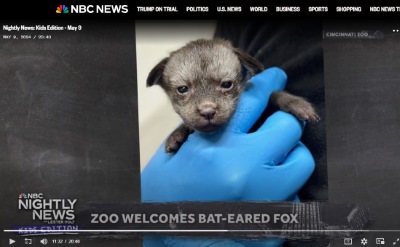
See bat-eared fox baby Kal on Nightly News: Kids Edition – May 9 (nbcnews.com)!!
The good part starts around 11:30. Enjoy!
************
ZooTales
***************
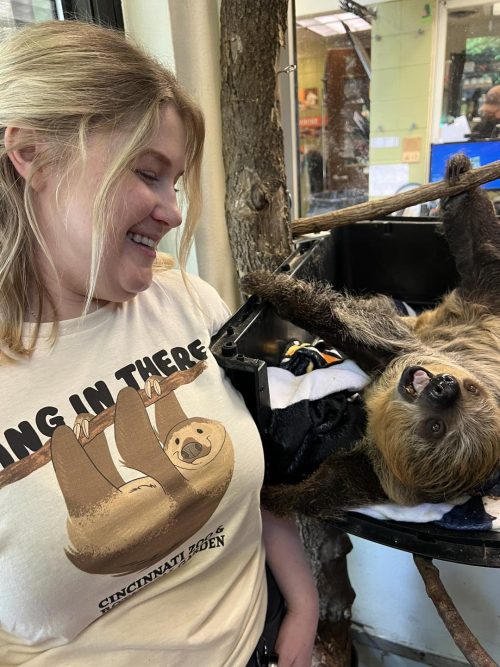
May is Zoo Babies month and Cincy Shirts is helping us Celebrate!
*************
5/17 – Endangered Species Day
Plant & Animal Updates
Gladys Update
************
Baby Sue’s Journey
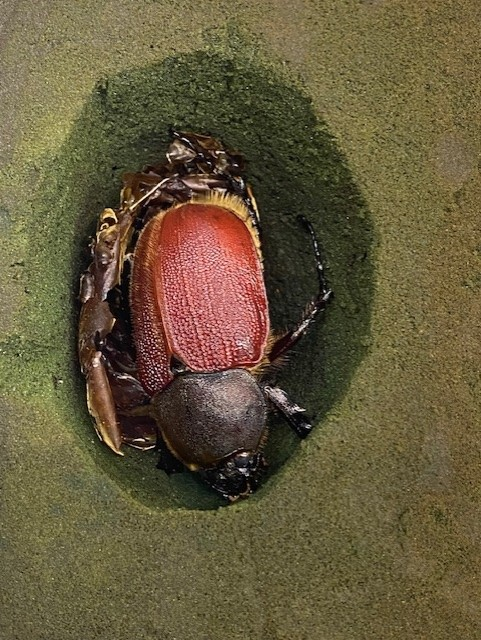
Recently, I had the privilege of spending time with Michelle, one of our incredible insect keepers. She shared fascinating insights into the world of insects and the remarkable dedication and achievements of the team. One story that stood out was about Sue, a beetle whose journey I had the chance to learn about in detail.
Sue’s adventure began on July 25, 2022, when she was collected as an egg. She hatched on August 9, 2022, and grew rapidly as a larva, reaching a maximum weight of 44.39 grams by August 20, 2023. At this stage in her life cycle, Sue formed a pupal cell, or “dirt cocoon,” to continue her growth.
Unfortunately, Sue’s pupal cell was accidentally broken. Michelle acted quickly, creating a makeshift cell from floral foam to save Sue and ensure her growth into adulthood. On February 28, 2024, Sue was moved into her new cell, where she has thrived. Michelle was thrilled to report that on April 29, 2024, Sue successfully molted into a teneral adult—a phase where she would typically still be in her pupal cell. Sue is now expected to remain in her floral foam cell for about a month before emerging and feeding on fruits.
This success story, nearly two years in the making, is a testament to the extraordinary work being done at the Insectarium. From saving endangered species to breeding challenging insect species, the dedication of our insect keeper staff is truly inspiring. Don’t miss the chance to explore the amazing insects cared for in the insectarium and stay tuned for more updates on Sue and other incredible stories!
To learn more about this process from Michelle, and hear about Thane’s favorite insect, check out the 2 videos below! If you see Michelle, or any of the insect keepers, around the Zoo make sure to thank them for the incredible work they do!
***********
Juno Update
You can now see Juno in the Discovery Forest!
***********
Lil Chedda
***********
Galapagos Tortoise
***********
New Red Panda in Town!
***********
Celebrating Amphibians
***********
Mexican Wolves
**********
Kal Update
Conservation Corner
Mexican Wolf News!
***********
Sharing New Data in the American Journal of Veterinary Research
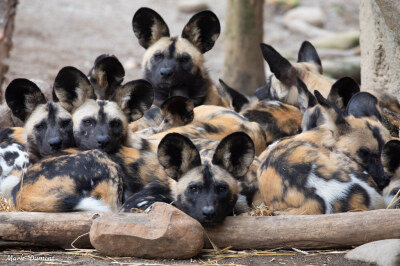
From Jessica Heinz, Associate Veterinarian:
Sharing data is critical for success in veterinary medicine of zoological species. There is so little known and so many species to take care of that every piece of information may be useful to managing a species across zoos and in wildlife situations.
When vet staff were investigating some of the causes of diarrhea and gastrointestinal (GI) upset in our pack of African Painted Dogs (APDs), we found that some of the markers of pancreatic function and intestinal absorption were low when compared to domestic dog values. Since their clinical signs didn’t match the disease indicated in domestic dogs, we decided to test the whole pack and found that everyone was low. Luckily, the vet staff keeps an extensive bank of samples that date all the way back to the 1990s which is an important cache of information. We tested both healthy and sick dogs from the past 20 years and found similar results.
Because all of the healthy APDs were showing the same low pancreatic and GI absorption values, it became clear that the reference ranges for domestic dogs were inappropriate in this species. A low value in a domestic dog is diagnostic for severe pancreatic disease while all of our healthy APDs clearly didn’t have the same illness. One challenge is that we do not have data on all disease in all species so we often need to extrapolate from similar species. APDs are very similar to domestic dogs in many ways, but it was pretty clear these analytes were not directly translatable. Unfortunately, in this investigation we were not able to create a validated reference range for APDs. This would require additional investigation of the testing process itself, sampling from APDs outside of our institution, and confirmation of these values from sick APDs. Maybe in the future we will be able to create this validated testing, but in the meantime vet staff felt it was important to share this information with the rest of the vet community so that other vets weren’t confused or accidentally misdiagnose APDs in their care.
Veterinarians and scientists share these types of findings through publication of our research in peer reviewed and respected journals. The process of gathering data, writing the manuscript, submitting to the journal, having veterinary professionals review the manuscript, make edits and create a final published version took about seven months, and that was a fairly quick turnaround. Testing for the banked samples, current APDs and publication fees also cost several thousand dollars. We are appreciative of the zoo’s support of these efforts! This article is now published in an open-source veterinary journal (the American Journal of Veterinary Research) which means that it is free to anyone who may want to read it and learn from it. If you would like to read the publication, you can do so here:
https://avmajournals.avma.org/view/journals/ajvr/aop/ajvr.24.02.0043/ajvr.24.02.0043.xml
************
Help our Monarchs
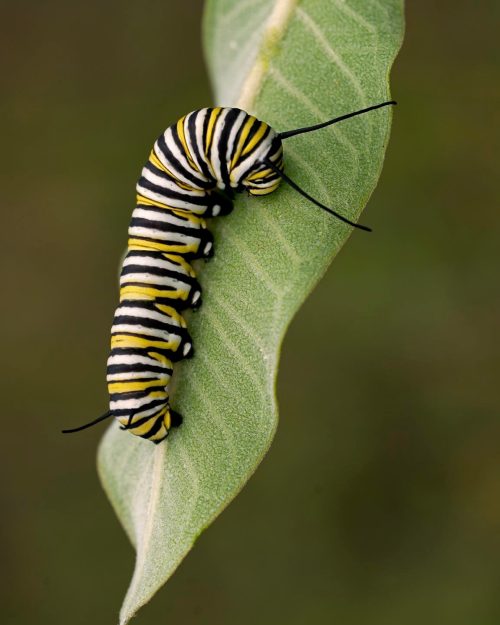
The monarch caterpillar eats its way through life, eventually growing to 2,000 times its original mass! After hatching from a tiny egg about the size of the tip of a pencil, monarch caterpillars go through five stages called “instars”. They group bigger and molt or shed their skin between each phase. Monarchs spend about 10-14 days as a caterpillar, eating only milkweed. You can help by planting native milkweed for them to eat.
**********
Staff Updates
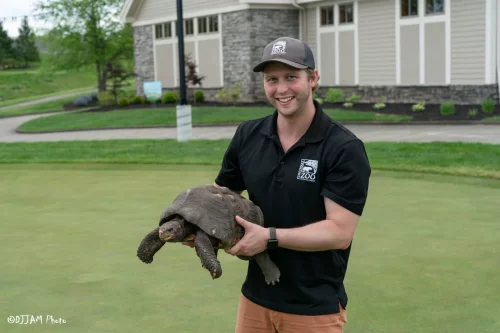
Gabe Rapp has been promoted to a new position as full-time Wild Encounters Coordinator. Gabe joined the zoo as a Wild Encounters intern in 2020 and has continued in the Wild Encounters department as an interpreter, supervisor, and most recently as a part-time coordinator. We are so thrilled to have him on board as this will allow us to expand our capacity and support for the growing Wild Encounters team!
While Gabe is a Wild Encounters jack of all trades, in this role specifically, Gabe will coordinate schedules for our staff and is the main point of contact for our volunteer group. Gabe is a seasoned animal handler and also assists in training staff on new animals to handle.
If you haven’t met Gabe, you should! He is a Cincinnati native and lives with his wife, Brooke, an adorable basset hound (Hank) and 2 cats! Gabe loves hiking, swimming, traveling, and good food! If you need anything from a trail recommendation in Hawaii or a good place to go for dinner, Gabe’s your guy!