Good Afternoon,
As part of our More Home To Roam capital campaign, we recognized the need for habitat improvements in the existing sea lion, polar bear, and white lion facilities. With Duke’s passing in April, our discussions for the sea lion space were accelerated to consider how to best upgrade this habitat in line with our animal welfare, conservation, and visitor engagement expectations.
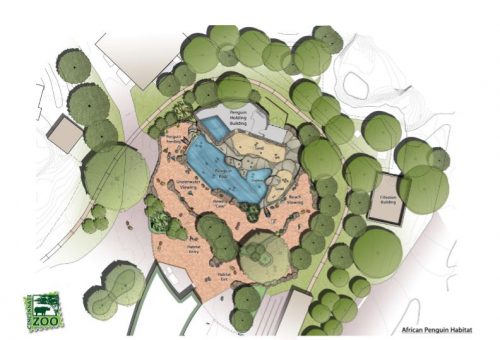
We are excited to share our plan to renovate this habitat into an innovative and inspiring space for our growing African Penguin colony (see attached). The new African Penguin habitat will be three times larger than their current space in Children’s Zoo, and offer a variety of new habitat features to maximize their welfare, including: a dynamic pool area to encourage natural swimming behavior and exercise, natural substrates to dig into and to promote improved foot health, outdoor heating and cooling so that penguins can stay outside longer in the year, and a dramatically larger indoor bedroom area with a pool and UV-transmitting skylights to ensure health and comfort during our Cincinnati winter. The newly constructed space will allow for our colony to grow from 11 birds to 30+, which will contribute immensely to ex-situ conservation efforts, not to mention inspiring our visitors to care more about the species’ plight.
As of February 2017, there were more than 900 African Penguins at 50 North American zoos and aquariums, making it one of the largest and most successful of the Association of Zoos & Aquariums (AZA) Species Survival Plans (SSP) (https://www.aza.org/species-survival-plan-programs). Additionally, African Penguins are one of the original five SAFE (Saving Animals From Extinction) species designated by AZA. The SAFE program represents a new commitment to harness the collective resources of AZA-accredited zoos and aquariums to save specific endangered species from eventual extinction (https://www.aza.org/aza-safe).
African Penguins are endangered in their native range and require the collective focus of aquariums, conservation organizations, and zoos like ours to ensure its survival into the future. Reproduction will be a key goal of this new habitat, and the new bedroom area will expand out nesting sites and maximize successful chick-rearing. These new nest sites are also a great opportunity to engage visitors in African Penguin field conservation, as a primary conservation strategy in South Africa is to build artificial nest sites along the coast. The Cincinnati Zoo & Botanical Garden supports the Southern African Foundation for the Conservation of Coastal Birds (SANCCOB), an international organization dedicated to the rescue, rehabilitation, and release of injured, ill, abandoned or oiled South African seabirds. SANCCOB was founded in 1968 to help African Penguins that were being oiled as a result of increased tanker traffic following the Six-day War’s closure of the Suez Canal. Since its inception, SANCCOB has handled more than 85,000 seabirds – mostly African Penguins (https://sanccob.co.za/).
Our hope is to have this construction completed and our African Penguins settled in by Late Spring 2020, and as you can imagine, there are many adjustments and changes that we will make along the way to ensure the best welfare for our animals and the best experience for our visitors. The footprint of this new habitat will require animals to move from Green Barn, and in a domino-effect, some offices will be moved to accommodate the relocation of the interpretive animals housed in the Green Barn. With Little Blue Penguins moving to Roo Valley next year, we will be reassessing this entry area to Children’s Zoo to consider the long-term needs. Select demolition for the new African Penguin habitat will begin by mid-October (i.e removal of the existing viewing deck). We will provide additional details as they are fleshed-out.
This new habitat will highlight our commitment to animal welfare and visitor experience, as well as contribute to conservation education. This is an exciting chapter in our Zoo’s history, and we’re excited to have this project be a part of it!
David Jenike
Chief Operating Officer