
Cincinnati Zoo is Saving Species with Milk!
Collaborating to create a recipe for aardvark milk
Cincinnati, OH (March 9, 2018)— Cincinnati Zoo & Botanical Garden is milking it. Whenever possible, the Zoo’s animal care team gets milk from lactating moms so scientists can analyze the composition. In Fiona the hippo’s case, knowing what was in her mom’s milk saved her life. Now, Ali the aardvark is making weekly deposits to the National Zoo’s Exotic Animal Milk Repository so scientists can create a recipe for synthetic aardvark milk!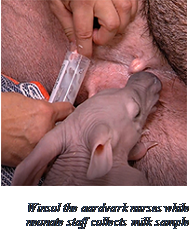
Video of aardvark and hippo being milked (includes narration)
“The aardvark care team has been closely supervising Ali and her baby, Winsol, since he was born. Because of this, Ali is comfortable being touched and doesn’t even seem to notice when she’s being milked,” said Barbara Henry, Cincinnati Zoo’s curator of nutrition. “Milk collection for other animals, like Fiona’s mom Bibi, at our Zoo has also been voluntary and did not require anaesthesia.”
Bibi’s milk sample was the first of its kind to be included in the milk repository. They do have one sample of aardvark milk that was deposited in 1992, but more samples from different animals give a better picture of how variable the milk can be. The care team has been milking Ali weekly since mid-January and will continue to do so until Winsol is weaned.
“Milk composition changes during the lactation cycle, so providing the lab with samples collected over a period of weeks will help us replicate mom’s milk for babies at different stages of development,” said Henry. “More animals and more time points will help us develop an aardvark formula with the right combination of sugar, protein, fat and water that can be used if a baby is not able to nurse from mom.”
Winsol (born on the Winter Solstice) is the first healthy aardvark baby to be born at the Zoo since 1994. He weighed about three pounds at birth and is now ten times that weight. In addition to mom’s milk, he is starting to try solid foods.
Cincinnati Zoo visitors will be able to see Winsol and Ali in the Night Hunter’s habitat in a few weeks! Check CincinnatiZoo.org for details on the public debut.
About Aardvarks
Aardvarks are nocturnal mammals native to central and southern Africa. They have powerful claws that they use to rip open rock-hard termite mounds to obtain food and sweep their pig-like snouts from side to side to sniff out insects and lick them up with their long, sticky tongues. They typically weigh between 88 and 145 pounds. With long, donkey-like ears they are able to listen for signs of predators, like lions and leopards while foraging for their own food.
The world-famous Cincinnati Zoo & Botanical Garden is committed to inspiring visitors to care about wildlife and wild places. It has been rated the #1 attraction locally and one of the top zoos in the nation by Zagat Survey. It has also received rave reviews from Child Magazine, Parents Magazine, USA Today and TripAdvisor. Over 1.5 million people visit the Zoo’s award-winning exhibits, and more than 500 animal and 3000 plant species annually. The Zoo, an accredited member of the Association of Zoos & Aquariums (AZA), is internationally known for its success in the protection and propagation of endangered animals and plants and engages in research and conservation projects worldwide. Known as the #GreenestZooInAmerica, the Zoo is doing its part to conserve natural resources that are critical to saving wildlife and its habitats and is committed to greening its daily operations and reducing its impact on the environment through the use of rain gardens, recycled building materials, solar panels and more. The Cincinnati Zoo is a 501(c)(3) nonprofit organization.