
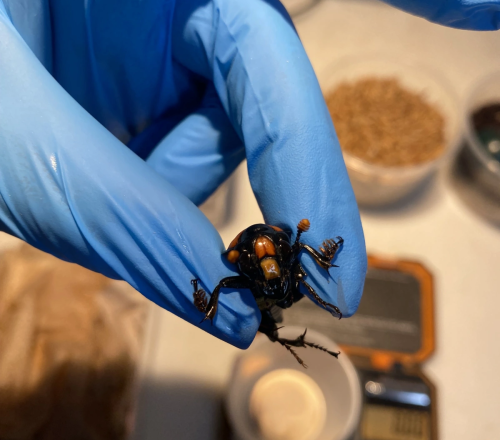
The Animal Team at World of Insect has been putting out some AMAZING stories, here are 2 that have come out in the past 2 weeks.
Winifred the Halloween Crab
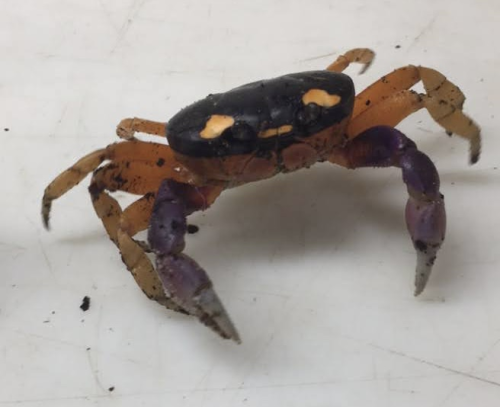
If you’ve ever visited our department hoping to catch a glimpse of our elusive Halloween crab, you’re not alone—and you’re also probably out of luck. Winifred, our beautifully shy Halloween crab (Gecarcinus quadratus), is a master of hide-and-seek. By day, she stays tucked away in her cozy burrow, hidden from view. That’s why we don’t have her in the public lobby—she’d rather have her peace and quiet than deal with the paparazzi.
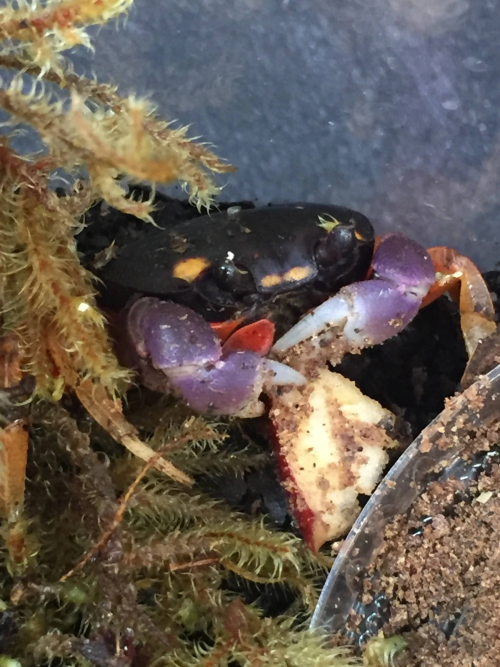
But recently, we got a sneak peek into Winifred’s nighttime routine using a special infrared camera. As soon as the lights went out, our camera caught her in action! She emerged from her burrow under the cover of darkness, scuttled over to her food dish, selected a tasty bite, and—true to form—took it back underground to enjoy in private. Candlelit dinner for one, Halloween crab style.
In the wild, Halloween crabs are found along the Pacific coasts of Central America, from Mexico down to Panama. They’re known for their bold colors—purple legs, orange-red bodies, and black carapaces—but despite their vibrant looks, they’re secretive and mostly nocturnal. They spend their days hiding in burrows or under debris, coming out at night to forage on fallen leaves, fruits, and other plant matter.
Though she’s not on public display, Winifred still plays a part in educating our staff and inspiring curiosity behind the scenes.
Stay tuned—who knows what other nighttime adventures we’ll uncover next?
*************
Beetlemania Spring Edition Results
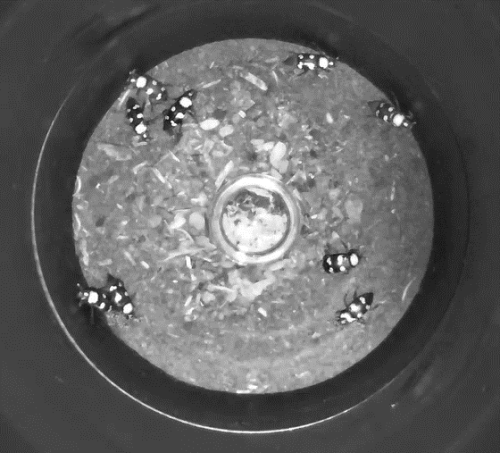
This spring, love was in the air (and underground) as our American burying beetle breeding program kicked off another season of matchmaking, rat burying, and beetle baby booming! If you’re new here, the American burying beetle (Nicrophorus americanus) is a federally endangered species that once spanned much of North America. Now, it survives only in fragmented populations, which is why breeding and reintroduction efforts like ours are critical for its future.
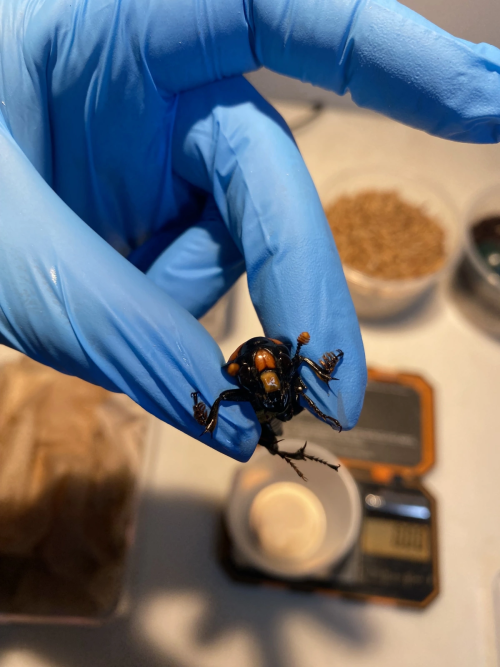
Bucket Bonanza: 27 Set, 19 Successes!
This year, we set up 27 breeding buckets, each one a cozy honeymoon suite complete with soil, shade, and an ethically sourced rat (a necessary resource for this species’ very specific reproductive needs). Out of those 27 buckets, 19 were successful, giving us a success rate just over 70%. Pretty impressive! In fact, it would have been even higher—if not for the notorious 24-19 lineage. That group’s parents didn’t exactly rise to the occasion.
Beetle Breakdown: The 24-19 Dilemma
Let’s talk numbers. Of the 497 larvae produced across all buckets, 51 came from the 24-19 beetles. But only 20 of those 51 made it to adulthood: a survival rate of just 39%. By contrast, the rest of our beetle families (those not cursed with the 24-19 drama) pulled off a whopping 93% survival rate, producing 422 strong adult beetles out of 446 larvae. We love an overachieving beetle family. So while we thank 24-19 for their service (and their three not-so-stellar clutches), we’ll be phasing out those genetics from future pairings.
Our Biggest (Literally!) Cohort Yet
Here’s the headline: this group of 442 beetles is the largest cohort we’ve ever bred here at the Cincinnati Zoo! Every beetle is measured and weighed as it emerges. We focus on the pronotum, the disc-shaped part of their thorax just behind the head. In past years, we considered anything over 10mm average to be a win. This year? The average pronotum size is 11.60mm, with our largest individual topping out at a whopping 12.86mm.
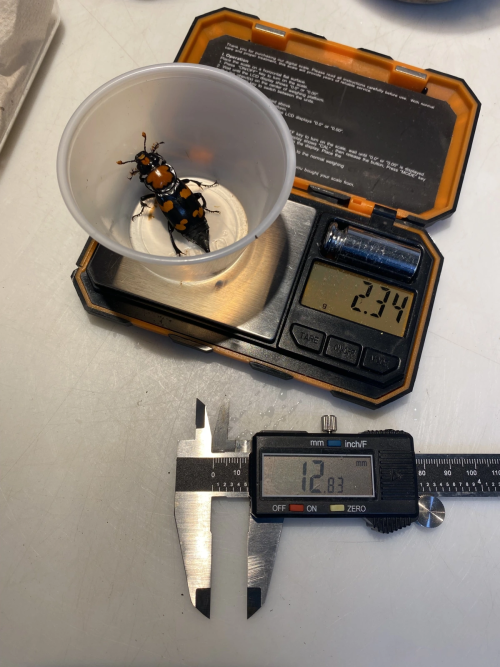
A Bug’s Life: What Comes Next?
About 200 males and 200 females will be paired and released this June at The Wilds, a long-term partner in our reintroduction efforts. The remaining beetles will stay behind to form our next breeding generation here at the zoo.
Why It Matters
Every beetle we raise brings us closer to rebuilding a self-sustaining wild population. These beetles aren’t just fascinating, they’re vital players in their ecosystems, recycling nutrients and supporting soil health through their carrion-burying behavior.
We’re incredibly proud of our bug team (and their delicate pronotum-measuring skills), and of course, of our new record-setting beetle crew. Except maybe 24-19. You tried. Kind of.
Stay tuned for our June release update, and maybe a few more beetle baby photos. Until then, keep it creepy, crawly, and conservation-minded.